With the end of another year that means a retrospective is needed (blogging requirement I think). I already gave my favorite Photos of the Day of 2012 from my own blog so I figured I would share the work of others. There is a lot out there to share. And although I am a user and fan of Flickr a good place to go beyond the cell phone shots and see some work that is often one notch above the rest is 500px.com. What’s even better, to make my life easier, they have done the leg work already on their blog and presented a good review of some of the best photography of 2012 (as submitted to their site). Note, none of these are my photographs and full credit goes to the individual photographers and the editors at the 500px blog. Also note, I picked some of my favorite categories, but there are more than I list here so be sure to head over to the 500px blog for all the best of the year.
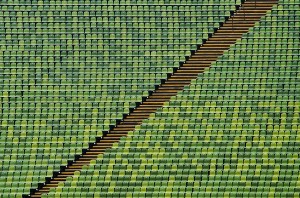
These are three of my favorite categories, but there are many more; commercial, celebrities, concerts (and others that don’t begin with a C). Check out the 500px blog. But be careful you could get sucked in a lose a whole day going through this site.
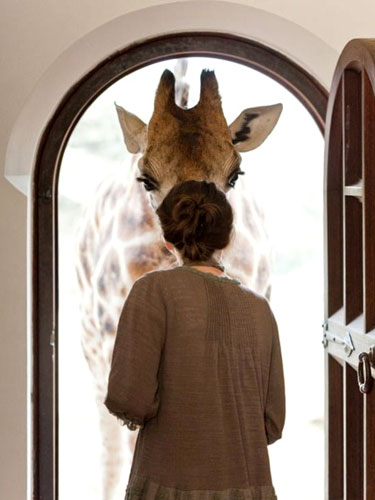
I love (love) this photograph by Robin Moore. It almost appears staged but in reality was just one of those “in the right place at the right time” photographs. This is definitely a photographer worth knowing more about and spending some time reviewing his work. Check out Robin Moore’s site for some truly beautiful and inspirational work.
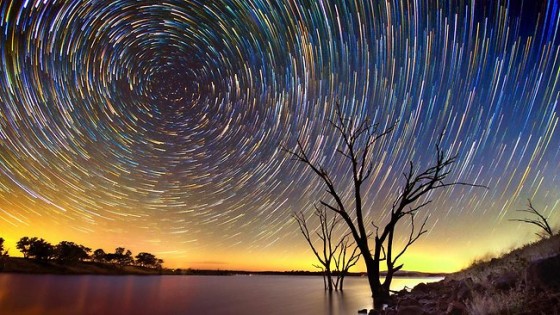
I’ve dabbled in star trail photography now and again. But I have not quite mastered it to the level of this Australian photographer. Featured in the Queensland Courier Mail, Lincoln Harrison has taken some amazing star trail photos of the Australian night sky.
If you are a fan of modern architecture or architectural photography chances are good you have heard of, or at least seen, Julius Shulman’s work. Shulman was an architectural photographer who documented the growth of Los Angeles predominantly in the 1950’s and 60’s. One of his most well known photographs is of the Case Study House #22 (aka the Stahl House). But that was just one of thousands of images Shulman took of the architecture of LA. And now those black and white photographs have inspired New York artist Amy Park. She has taken several of Shulman’s photographs and reproduced them in large scale color with watercolor.
Most of us spend our photography time capturing moments. Birthdays, vacations, graduations, weddings and the like. But photographer Erik Johansson photographs ideas rather than moments. In this TED video he describes his process for making what seem, on the surface, to be impossible photographs.
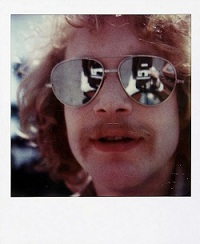
I ran across this on Chase Jarvis’ blog and it is really quite a feat. For 6,000 days between March 13, 1979 and October 25, 1997 New York based photographer Jamie Livingston took a Polaroid photo each day. That is some amazing dedication. I have tried the 365 photo of the day challenges and never quite got one every single day. So to keep it going to close to 18 years takes stamina. Livingston’s first Polaroid in 1979 was of his girlfriend at the time and his last one in 1997 was on his death bed. Take a look at the entire set of 6,000 Polaroids by Jamie Livingston here.
For any of us who have ever used a “handicap,” perceived or real, as an excuse to not do something, this story can be very humbling and encouraging. The last hobby you might expect a blind person to take up is photography. It is all visual after all, right? But a group of blind individuals in Mexico City are doing just that disproving that photography is strictly a visual art. Although they cannot see the end result of their work, which may be a frustration to most of us, they are taking photography beyond the visual and are presenting the world as they “see” it through their photographs. They use their other senses, hearing, smell, touch, to compose their images making them a visual interpretation of a world they cannot see.
Read the whole story of these inspirational photographers here.
Does every photograph have to have a commercial value? Is there always a client in mind? What about photography for art’s sake? Sometimes when your day to day life is wrapped up in the commercial side of photography and each photograph is taken based on specific requirement from a client you tend to forget that photography really is an art form. Someone recently pointed me to the online portfolio of a photography with the comment “I’m not sure what the commercial value of these photographs will ever be.” That was the work of photographer Mckay Jaffe on his site I Must Be Dead.
After checking out his site my response would be “this is some amazing work with a lot of talent behind it.” It is a very creative mind that is creating this photography. Maybe it will not accompany the next magazine article you read or be on a road side billboard, but I definitely see commercial potential in his work. Fashion can be very avant garde as can the advertising for many products. So, in my view, there is so much potential and incredible talent here the money is sure to come. And above all else it is ART, and you should check it out for no other reason.
The University of Arizona has a strong connection with photography. It is home to the Center for Creative Photography started by Ansel Adams and houses a collection of prints and photography related materials in its archives unmatched by almost anyone else. Now, in an effort to preserve the works of photographers and make them available online “…to increase access to unique and rare material…,” the U of A’s Special Collections is digitizing thousands of photographs.
The most recent collection to be digitized and made available to the public is the Jack Sheaffer Photograph Digital Collection. Consisting of more than 10,000 photographs spanning the period from 1955 to 1975 the images document the growth of Tucson, AZ and Southern Arizona during this period.
Sheaffer photographed tragic accidents, civil rights and anti-war marches, politicians, athletic events, celebrity visits and local beauty pageants, and the collection is continually growing.
This collection is a valuable resource for its documentation of Southern Arizona history. But it is also cool to just browse the vast collection of images.
Can you stand another book suggestion? I love books almost as much as I love photography so any chance I get to pack my book shelves full I generally take. Me and Amazon go way back.
I came across this book via the Daily Icon and felt it was worth sharing. Photographers A-Z by Hans-Michael Koetzle is a comprehensive overview of some of the finest photographers of the last 100 years. With over 400 entries from North America, Europe, Japan, Latin America and beyond this “encyclopedia of photographers” has cataloged the best of the last century.
Richly illustrated with facsimiles from books and magazines, this book includes all the major photographers of the last hundred years—especially those who have distinguished themselves with important publications or exhibitions, or who have made a significant contribution to the culture of the photographic image.
Name a photographer, any photographer, and chances are they are featured in Photographers A-Z. Just a few of those that grace the pages of this book are: Bruce Weber, Cindy Sherman, Ansel Adams, Diane Arbus, Richard Avedon, Julius Shulman, Robert Mapplethorpe, Robert Capa, and the list goes on and on.





 by Hans-Michael Koetzle is a comprehensive overview of some of the finest photographers of the last 100 years. With over 400 entries from North America, Europe, Japan, Latin America and beyond this “encyclopedia of photographers” has cataloged the best of the last century.


