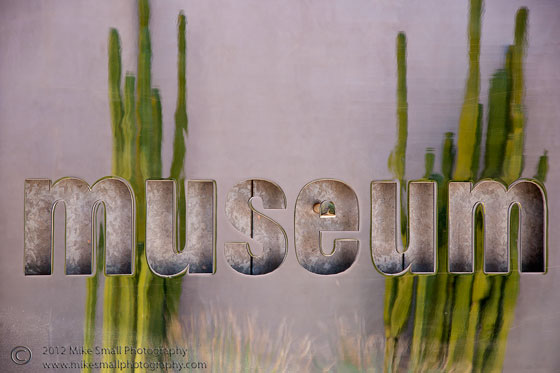
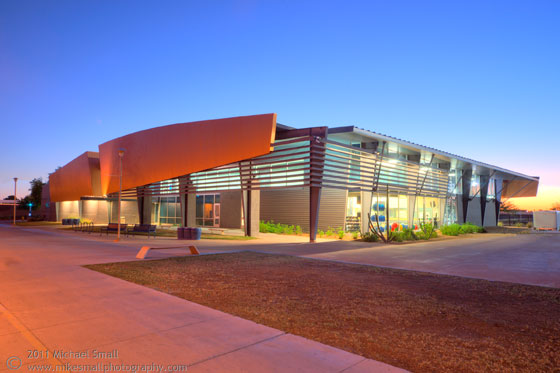
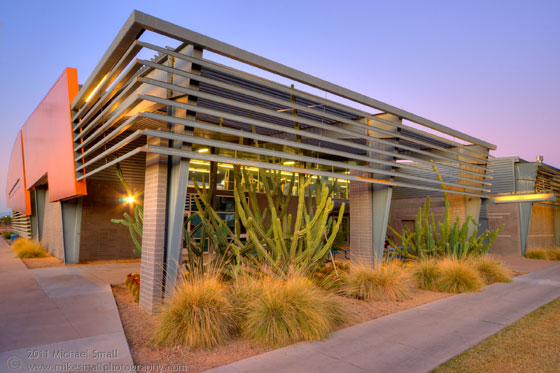
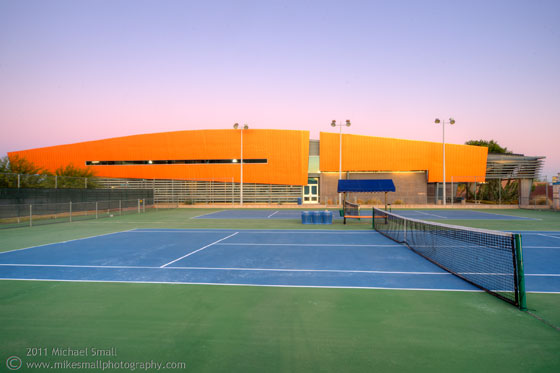
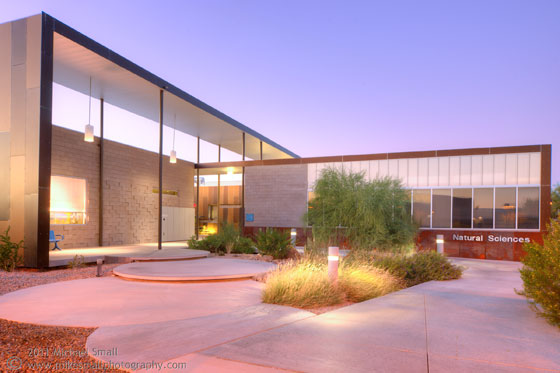
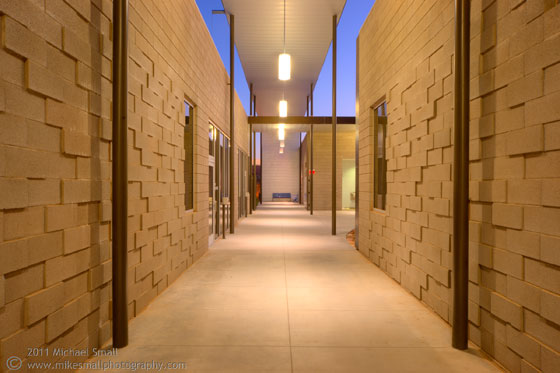
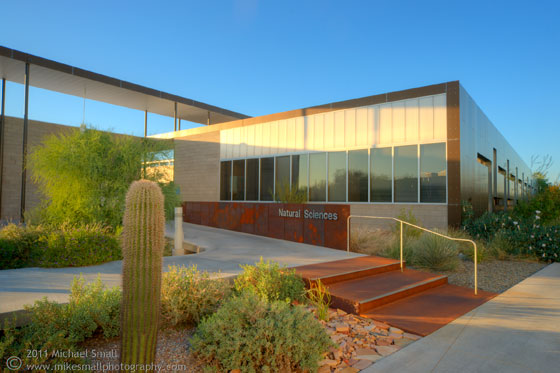
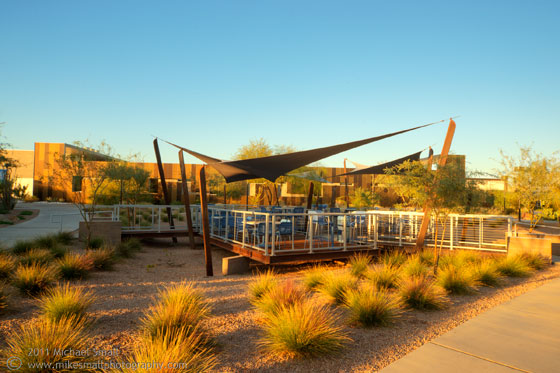
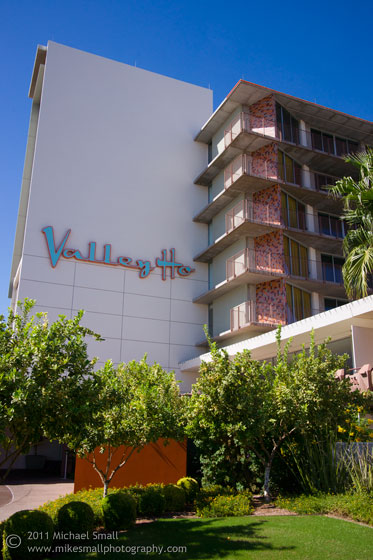
The Civic Center Library in Scottsdale was designed by Bennie Gonzales. Although not generally well know, Gonzales’ other work in the Phoenix area include the Heard Museum in central Phoenix.

f/11.0 – 1/100 sec – ISO 100 – Focal Length 28 mm

f/11 – 1/60 sec – ISO 100 – Focal Length 28 mm

f/11.0 – 1/100 sec – ISO 100 – Focal Length 50 mm

f/2.8 – 1/4 sec – ISO 100 – Focal Length 28 mm
This is the final set of images from Taliesin West in Scottsdale. Be sure to check out the first and second sets to get the whole picture.

f/5.6 – 1/50 sec – ISO 100 – Focal Length 50 mm
The roof of the drafting studio is made of canvas; a reminder that this was originally a desert camp. In the off season the canvas was removed and stored to help prolong its useful life.

f/7.1 -1/100 sec – ISO 100 – Focal Length 50 mm
In the 1930s the Taliesin West site was miles from “civilization.” Materials to construct the buildings were taken right from the site which further tied the buildings to the site. The early evening sun brings out the reds and oranges of the store used in the concrete form walls.
f/3.2 – 1/200 sec – ISO 400 – Focal Length 50 mm
This fire breathing dragon originally spout out water but was later fitted with a gas line to make it more authentic.
f/6.3 – 1/30 sec – ISO 100 - Focal Length 50 mm
f/7.1 – 1/15 sec – ISO 100 – Focal Length 50 mm
f/1.7 – 1/4 sec – ISO 800 – Focal Length 50 mm
Taliesin West on a desert night is a beautiful place to photograph. The Night Lights on the Desert tour gives you the opportunity to see the school in both the golden hour and lit up in the dark of night.
One post of six images from the Frank Lloyd Wright School of Architecture at Taliesin West is not enough to do justice. So as a follow up to my first post of images from Taliesin, here are six more photographs.
The Iconic View
f/6.3 – 1/40 sec – ISO 100 – Focal Length 50 mm
This view of Taliesin West is probably one of the most photographed of the campus. The school has been served by natural ground water since construction began in the 1930s. To this day it still in not hooked into the city water system.

f/6.3 – 1/125 sec – ISO 100 – Focal Length 50 mm
Many of the roofs at Taliesin are canvas. The original intent was to build a desert camp making canvas a fitting material. Today some innovative methods have had to been devised to prolong the life of the canvas in the harsh desert climate.

Living Room Roof
f/4.0 – 1/15 sec – ISO 200 – Focal Length 50 mm

The Drafting Studio
f/7.1 – 1/80 sec – ISO 100 – Focal Length 50 mm

Asian Art
f/2.8 – 1/40 sec – ISO 200 – Focal Length 50 mm
Frank Lloyd Wright had an infinity for Asian art. There are hints of it placed through out the property such as these figures which Wright bought in pieces and had an apprentice reassemble.
I recently took the Night Lights on the Desert tour at Frank Lloyd Wright’s Taliesin West. Taliesin West is the winter home to the Frank Lloyd Wright School of Architecture and is located in North Scottsdale, Arizona. If you are familiar with Wright’s style you will immediately recognize the buildings of the school as his architecture. Work began on the school in 1937 when that part of Scottsdale was just open desert. Today the suburbs have encroached, but the school’s 300 acres of land keep a buffer between it and urban sprawl.
The Night Lights on the Desert tour is a great tour for anyone, but it gives the photographer the opportunity to see the architecture of Taliesin at the golden hour when the light is prime. The only way to photograph the grounds and buildings are with a guided tour so your photography prospects may be a bit limited. But with a little preparedness you should not be impeded too much. Here are few things to keep in mind:
- Try to hang out at the back of the pack. You do not want to stray from the group or fall too far behind, but being at the back will give you a chance to get some “tourist free” shots once the tour group has moved out of space.
- Fidgeting with lens changes while trying to pay attention to a tour guide and stay with the group can be a challenge. Pick one good universal lens and stick with it.
- Try not to rely too much on flash photography. You will have enough natural light for most of the tour (in the summer months in particular) to capture what you need with ISO, aperture and shutter speed adjustments.
- Some photographers have ruined it for the rest of us. Until not too long ago, photography for personal use, was allowed most everywhere on the tour. But when images of Wright designed furnishings and other artifacts began showing up for sale on the internet the Foundation stopped allowing photography in the interior spaces. Make sure you abide by the restrictions so that they are not forced to eliminate photography altogether.
Taliesin Petroglyphs
f/7.1 – 1/40 sec – ISO 100 – Focal Length 50 mm
This rock art was found in the McDowell Mountains on the Taliesin land back in the 1930′s and relocated to the site of the buildings by Wright. The second image from the left on the bottom was incorporated by Wright into his logo design.

Entrance to Taliesin West
f/9.0 – 1/100 sec – ISO 100 – Focal Length 50 mm

Taliesin West Roof Lines
f/11 – 1/200 sec – ISO 100 – Focal Length 50 mm
The roof lines of the buildings at Taliesin West reflect the lines of the McDowell Mountains in the background while the stone used from the site reflect the color of the landscape.
Entrance Fountain at Taliesin West
f/11.0 – 1/30 sec 0 ISO 100 – Focal Length 50 mm

Frank Lloyd Wright’s Office
f/8.0 – 1/200 sec – ISO 100 – Focal Length 50 mm
Similar to the roof line image above, the slope of the roof of the building that served as Mr. Wright’s office follows the slope of the mountain behind it. The colors of the rocks and concrete used in the walls further connect the building to the site.
Phoenix Sunset
f/3.2 – 1/250 sec – ISO 200 – Focal Length 50 mm
Just a few clouds in the sky make for more dramatic sunsets. This sunset was photographed from Taliesin West in Scottsdale. The mountain in the distance is Camelback Mountain.